

Imagine a US DeFi user moving funds after spotting an opportunity on a different EVM network. The tokens are in a wallet on Ethereum, the application is deployed elsewhere, and the user is deciding whether to bridge assets first, swap later, or trust a route that appears to do both. The interface may show one large “swap” button, but underneath it can involve several contracts, liquidity pools, network fees, approvals, and security assumptions.
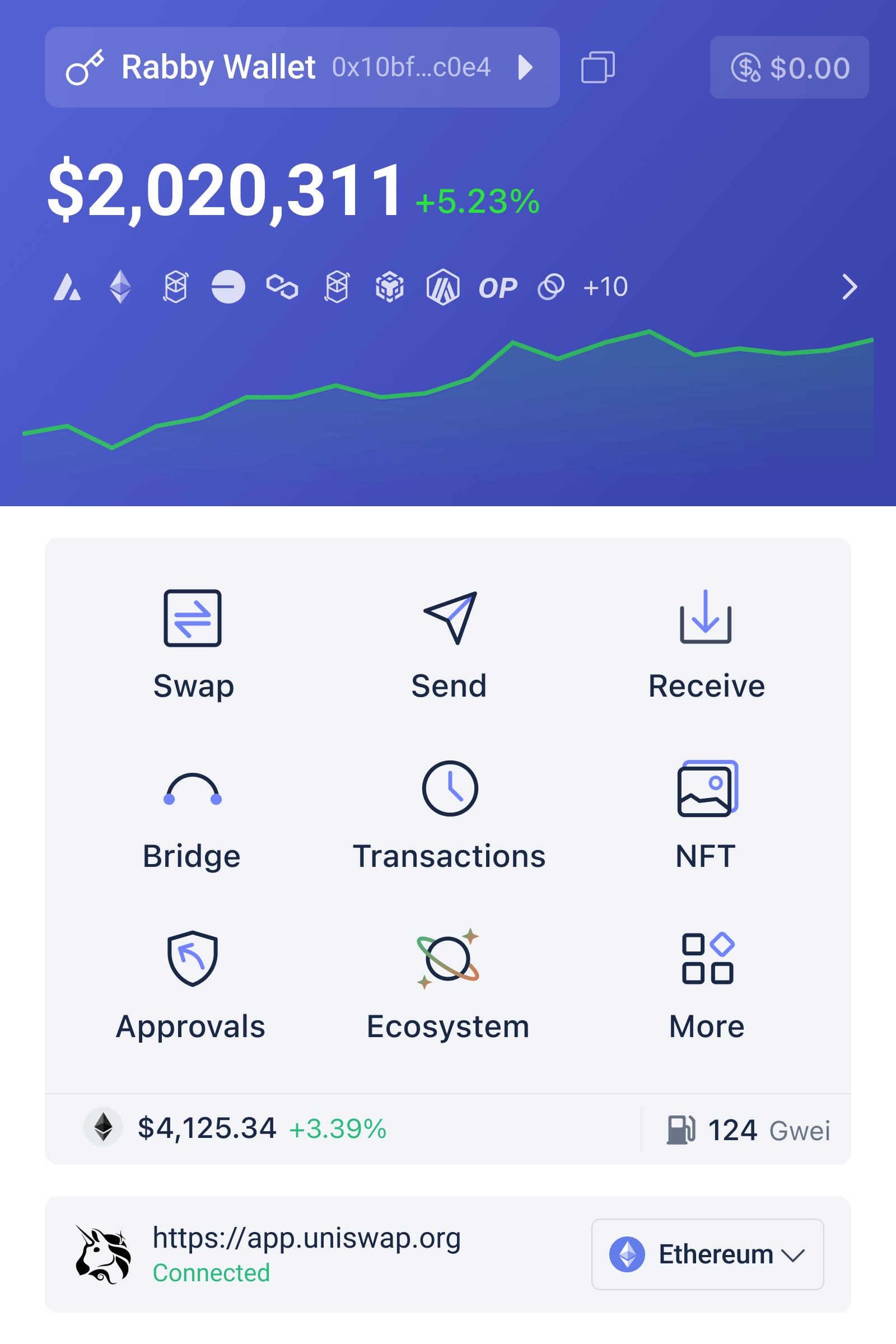
This is where a multi-chain wallet becomes more than a digital key holder. A wallet such as Rabby can help a user see networks, assets, transaction simulations, and signing requests in one working environment. Yet the important misconception is that a wallet makes cross-chain activity a single transaction. Usually, it does not. It makes a complicated process easier to inspect and operate; it cannot remove the underlying technical and economic risks.
The practical case: one goal, several mechanisms
Consider a user who wants to exchange an asset held on one EVM-compatible chain for an asset available on another. “EVM” refers to the Ethereum Virtual Machine, the execution environment shared or adapted by many blockchain networks. Because these networks use related smart-contract standards, a compatible wallet can often connect to applications across them. That compatibility is useful, but it does not mean the networks share one common state or one universal settlement layer.
A same-chain swap generally involves a decentralized exchange contract. The user approves a token, submits a trade, and receives another token according to the pool’s available liquidity and pricing formula. A cross-chain swap adds another problem: the source chain and destination chain must coordinate value transfer. A provider, bridge, messaging system, or network of liquidity providers may temporarily hold assets, mint a representation, release funds, or execute a destination-chain transaction.
The interface may combine these stages into one guided flow. Mechanically, however, the user could still be authorizing multiple actions. There may be a token approval, a deposit into a bridge or liquidity system, a message relaying step, and a final transaction on the destination network. The wallet’s role is to present and sign those actions. It is not the same as guaranteeing that every intermediary is safe, solvent, correctly configured, or available.
This distinction matters because transaction count and risk are not identical. A single confirmation screen can conceal a broad permission. Conversely, several confirmations can represent ordinary, bounded steps. The more useful question is not “How many clicks are required?” but “What is each contract allowed to do, where does value wait, and what event causes the destination funds to arrive?”
Myth versus reality in multi-chain wallets
Myth: a multi-chain wallet merges blockchains
Reality: it provides a common control surface for separate networks. Each chain retains its own balances, transaction history, block production, fee market, and finality assumptions. A wallet can help a user switch networks and interact with applications, but it cannot make a transaction on Ethereum automatically valid on another chain.
This is why a user may have a sufficient dollar value of assets but still be unable to act. Fees are paid in the native asset of the network where a transaction executes. A person holding a stablecoin on a destination chain may still need that chain’s native token to pay gas. Network selection is therefore not a cosmetic setting; it determines which ledger changes, which fee is charged, and which contracts receive the instruction.
Myth: the quoted output is guaranteed
Reality: a quote is conditional. It depends on liquidity, price impact, slippage tolerance, routing, fees, and the time between quotation and execution. In cross-chain activity, the destination result can also depend on a separate market or relayer completing its work. A user should distinguish an estimated output from a guaranteed minimum, and understand what happens if the route fails halfway through.
Myth: wallet security and protocol security are the same thing
Reality: they are different layers. A wallet may help identify suspicious approvals, display contract information, or simulate a transaction before signing. Those features can reduce user error and improve decision quality. They cannot eliminate vulnerabilities in a bridge, an exchange, a token contract, a browser environment, or a compromised private key.
In security terms, the wallet protects and mediates access to the user’s keys, while the application determines what the signed instruction attempts to do. If a user signs an unlimited token approval to a malicious or later-compromised contract, the wallet has not necessarily been “hacked”; the user has granted an authority that may be abused. The practical defense is to inspect permissions, limit exposure, and avoid treating familiar branding as proof of contract safety.
Why Rabby is relevant to this workflow
Rabby’s stated focus is Ethereum and EVM networks, with an emphasis on on-chain use across many compatible chains. That positioning fits the actual problem faced by DeFi users: not merely storing assets, but moving between applications, networks, and signing contexts without losing track of what is happening. For someone setting up the browser environment, the official installation path should be treated as a security decision. A user researching the rabby extension download should verify the source, review requested permissions, and ensure the extension is installed in the intended browser profile.
The value of a browser wallet is partly cognitive. It keeps the user close to the transaction context: which network is active, which account is connected, which contract is being called, and what assets are involved. This can make a difference when a DeFi session spans a decentralized exchange, a bridge interface, a lending market, and a portfolio dashboard. Without a consistent wallet view, users may confuse a token’s symbol with its contract address, mistake a bridged representation for the native asset, or send funds to a network where they cannot immediately use them.
Transaction simulation is especially useful as a decision aid, although it should not be treated as a formal audit. A simulation can reveal expected balance changes or warn about an unusual result before a user signs. It may not predict every failure caused by changing prices, block conditions, an external relayer, or a contract state that changes after the simulation. The right mental model is an instrument panel, not an oracle: it improves visibility while leaving judgment with the user.
A reusable framework for evaluating a cross-chain swap
Before approving a route, ask five questions. First, what is the source asset and what exactly will arrive on the destination chain? Similar symbols can represent different contracts, and a bridged token may not have the same redemption or liquidity profile as a native token. Second, which network pays the fee at each stage? A route can fail operationally if the user lacks gas on the source or destination side.
Third, who or what provides the cross-chain coordination? Identify whether the route depends on a bridge, a liquidity provider, a relayer, or a combination. The crucial issue is not only speed. It is how the system handles a delayed message, an unavailable destination transaction, or a mismatch between the source deposit and the expected destination instruction.
Fourth, what permissions are being granted? An approval may allow a contract to spend a token on the user’s behalf. If the amount is not constrained, the permission can remain relevant after the immediate swap. Revoking old approvals can reduce residual exposure, though revocation itself requires a transaction and therefore a network fee.
Fifth, what is the failure exit? Some systems refund automatically; others require a manual claim, a support process, or patience while a message is retried. A cheap route with unclear recovery may be less attractive than a slightly more expensive route with transparent settlement rules. This is a general DeFi lesson: execution quality includes failure handling, not just the best displayed price.
The trade-off behind convenience
Aggregation reduces friction, but abstraction can hide complexity. When several actions are compressed into one interface, the user gains speed and loses some immediate visibility unless the wallet explains the steps clearly. This is a classic human-computer interaction trade-off: fewer visible controls can lower cognitive load for routine tasks while increasing the danger of unnoticed assumptions.
There is also a liquidity trade-off. A cross-chain route may offer access to markets that are not available locally, but fragmented liquidity can produce wider spreads, greater price impact, or a less reliable exit. Network fees vary with demand, and a route that looks efficient for a large trade may be uneconomic for a small one. The best path is therefore conditional on amount, urgency, token liquidity, gas costs, and the user’s tolerance for intermediary risk.
For US users, tax and record-keeping considerations add another practical boundary. A swap, bridge deposit, liquidity-provider action, or receipt of a different token may create a transaction record that needs interpretation. The wallet can help organize on-chain activity, but it does not determine a user’s tax obligations. Anyone making frequent or substantial transactions should keep detailed records and seek qualified tax advice rather than relying on an app label.
What to watch next
Recent project messaging has emphasized Rabby as a wallet for Ethereum and EVM networks and encouraged use through browsers such as Chrome and Brave. The meaningful question is not whether broader chain coverage alone makes DeFi safer. It is whether wallet interfaces can continue improving network identification, simulation, permission visibility, and failure-state explanations as cross-chain systems become more complex.
If those tools become more precise, users may make fewer mistakes without pretending that bridges and protocols are risk-free. If interfaces prioritize speed while obscuring contract behavior, convenience could instead increase the scale of misunderstandings. The signal worth watching is therefore not a slogan about being multi-chain; it is the quality of explanations presented before and after a user signs.
The durable takeaway is simple but easy to overlook: a multi-chain wallet does not erase boundaries between blockchains. It helps the user navigate them. Cross-chain swaps are best understood as coordinated operations across separate systems, each with its own liquidity, fees, permissions, and failure modes. Once that model is clear, Rabby’s browser extension can be used for what it is most valuable for—bringing the moving parts into view—while the user remains responsible for questioning the route.
Frequently asked questions
Does Rabby itself perform every cross-chain swap?
A wallet generally provides the account connection, network context, transaction review, and signing process. The actual swap or cross-chain transfer is executed by the decentralized application, exchange, bridge, liquidity provider, or other protocol selected by the user. Always evaluate that service separately from the wallet.
What should I check before installing a browser wallet extension?
Use a trusted source, confirm the browser and extension details, review requested permissions, and protect the recovery phrase offline. Never share a seed phrase or private key with a website, support agent, or software installation prompt. A legitimate wallet will not need that information to “activate” an account.
Why can a cross-chain transaction be delayed even when the source transaction succeeded?
The source deposit may need to be observed, verified, relayed, and matched to a destination-chain action. Each stage can have different confirmation requirements or operational dependencies. A successful source transaction proves that the source chain recorded the deposit; it does not by itself prove that the destination transfer has settled.
